
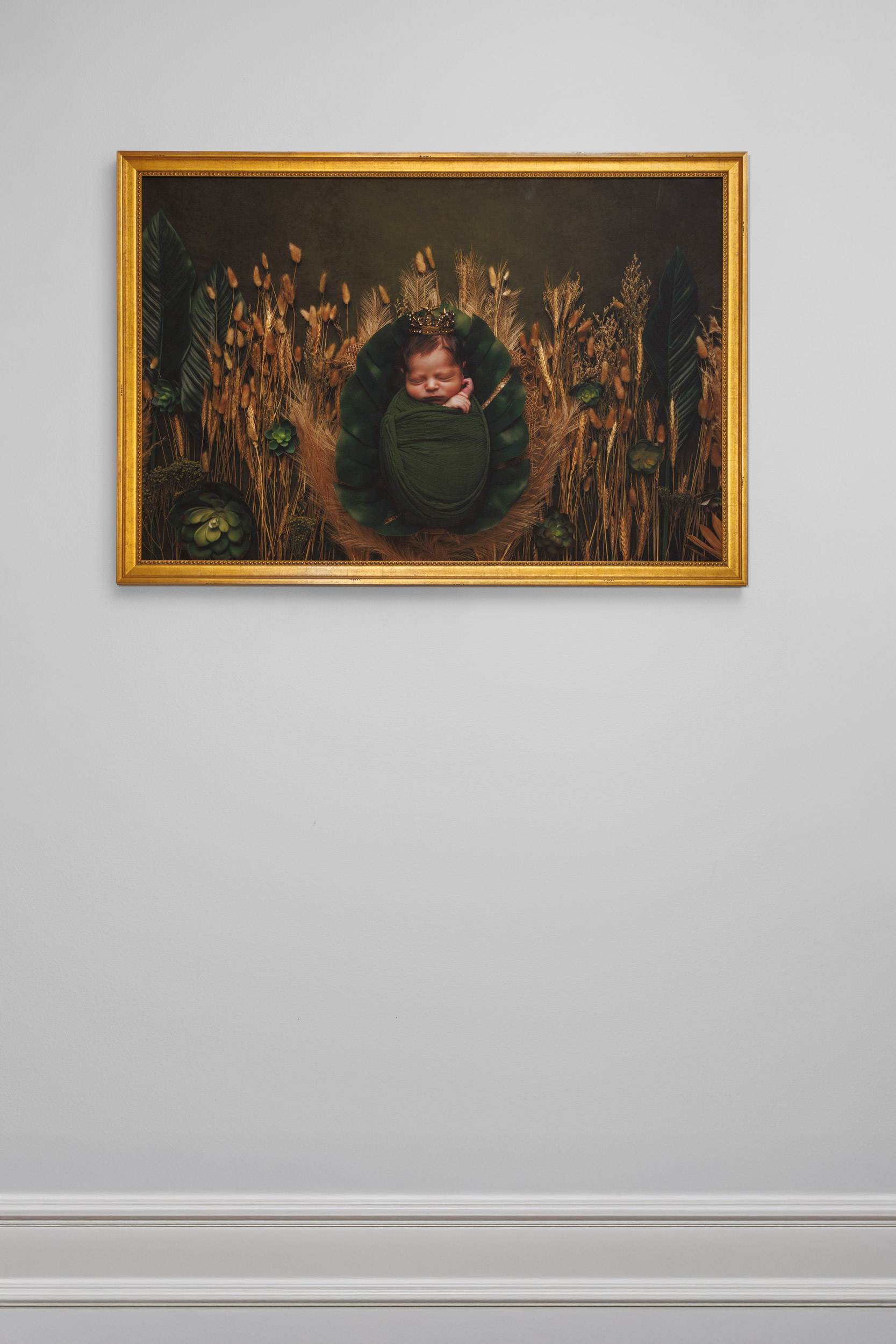
Your walls and living spaces are a blank canvas – and that can feel intimidating.
I hear clients ask all the time: What size should my portrait be? Will it work above my couch, and how do I measure the space so it actually fits? In this guide I’ll answer those questions with simple rules, quick measurements, and easy tests you can do at home to visualize your art before you commit.
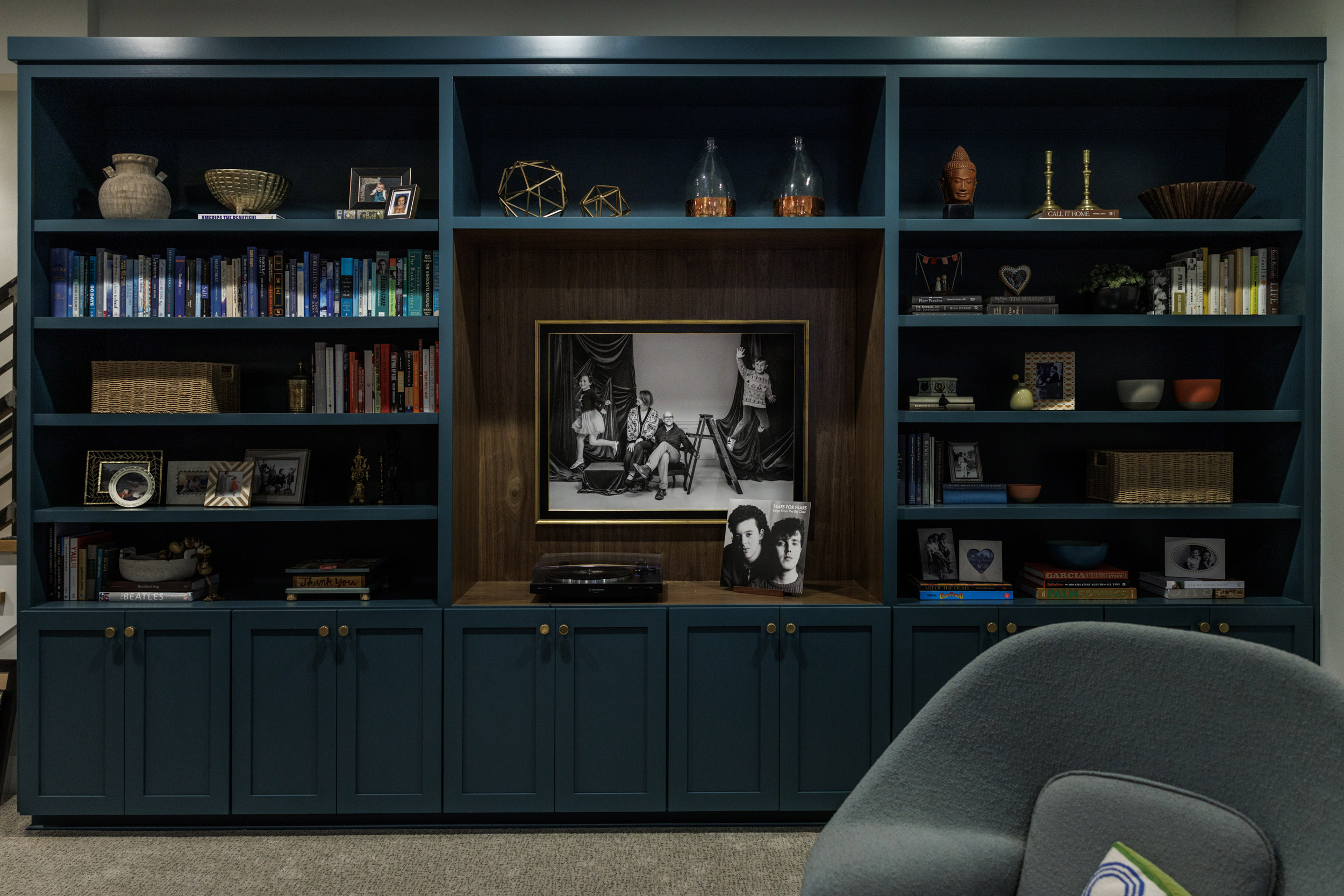
Custom teal built-in bookcase with framed family portrait and curated decor – photographed by Anj Portrait Studio.
| Why Size Matters: Scale, Impact and Balance |
Let’s talk about Visual Weight.
In a room, scale reads as visual weight: larger portraits (roughly 20×30″ and up) act as focal points, while smaller prints (around 16×24″ and under) read as accents. When you have an entire wall available, don’t assume bigger is always better – first assess the room. If the space is already busy (patterned textiles, multiple furniture pieces, strong architectural details) it likely needs a single strong focal piece; if another element already dominates, the portrait should support rather than compete.
Impact
Art proportion sets the room’s mood. Ask yourself what you want people to feel in the space: bold and energetic, calm and intimate, or balanced and lived-in. A large-scale portrait creates drama and presence; medium sizes feel approachable and grounded; small pieces are quiet and decorative. Match the piece’s emotional intent to the room’s purpose (entryways and living rooms suit bolder work; bedrooms and reading nooks benefit from softer, smaller choices).
Balance
Awkward negative space often signals a sizing or placement mismatch. Aim to coordinate your artwork with surrounding furniture, built-ins and lighting so everything reads as a composed arrangement. Simple rules: leave 6–12″ between the top of furniture and the bottom of the frame, size art to about 60–75% of the furniture width when placing above sofas or consoles, and consider frame and mat width as part of the finished dimensions. When those proportions feel right, the room will feel intentional rather than accidentally empty.
| Measure First: How to Size for Furniture & Walls |
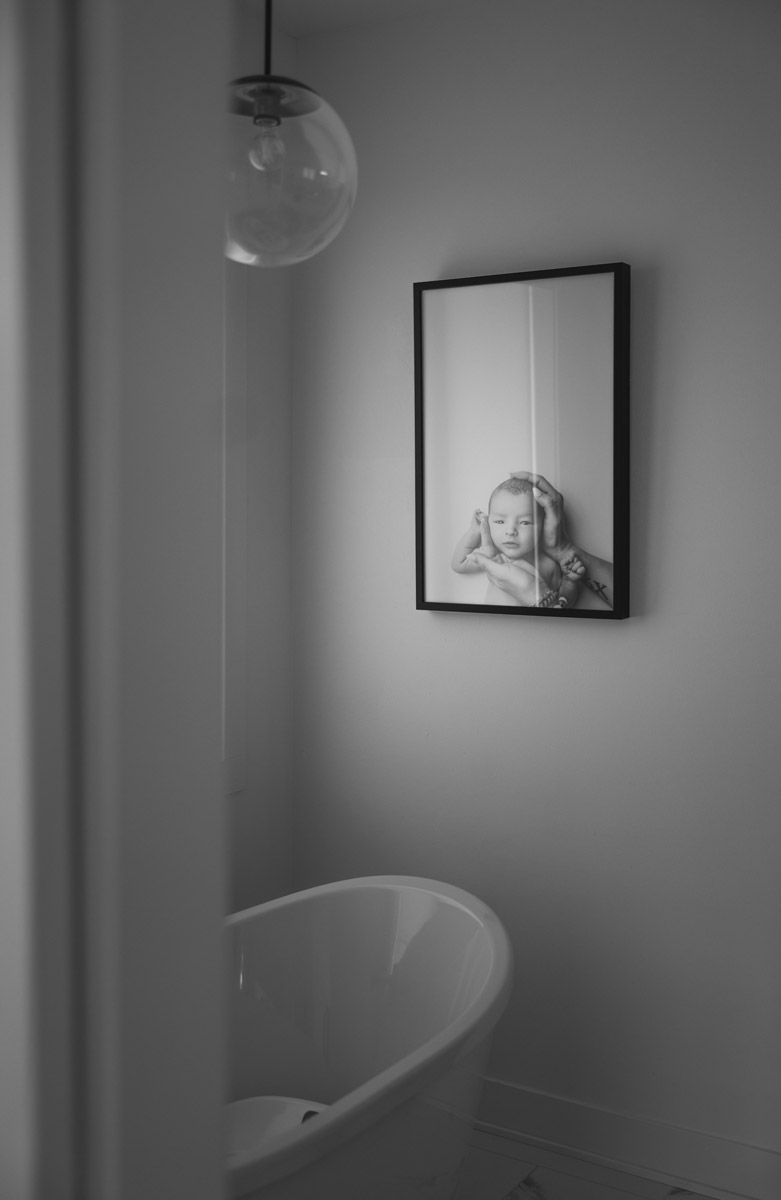
Framed black-and-white newborn portrait displayed above a freestanding tub – photographed by Anj Portrait Studio.
Take 3 measurements
Wall Width, Furniture Width, Ceiling Height
Rules of Thumb
Above sofas/console: art width should be approximately 60 – 75% of furniture width.
Above beds: art width should be approximately 50 – 70% of headboard width.
For empty walls: leave 6-12″ margins from edges/ceilings.
Note clearance heights
Hang art approximately 6-8″ above furniture; center at 50-60″, eye level if the art is standalone.
| Standard Portrait Print Sizes and Common Uses |
8×10 / 5×7 | desk frames, small shelves
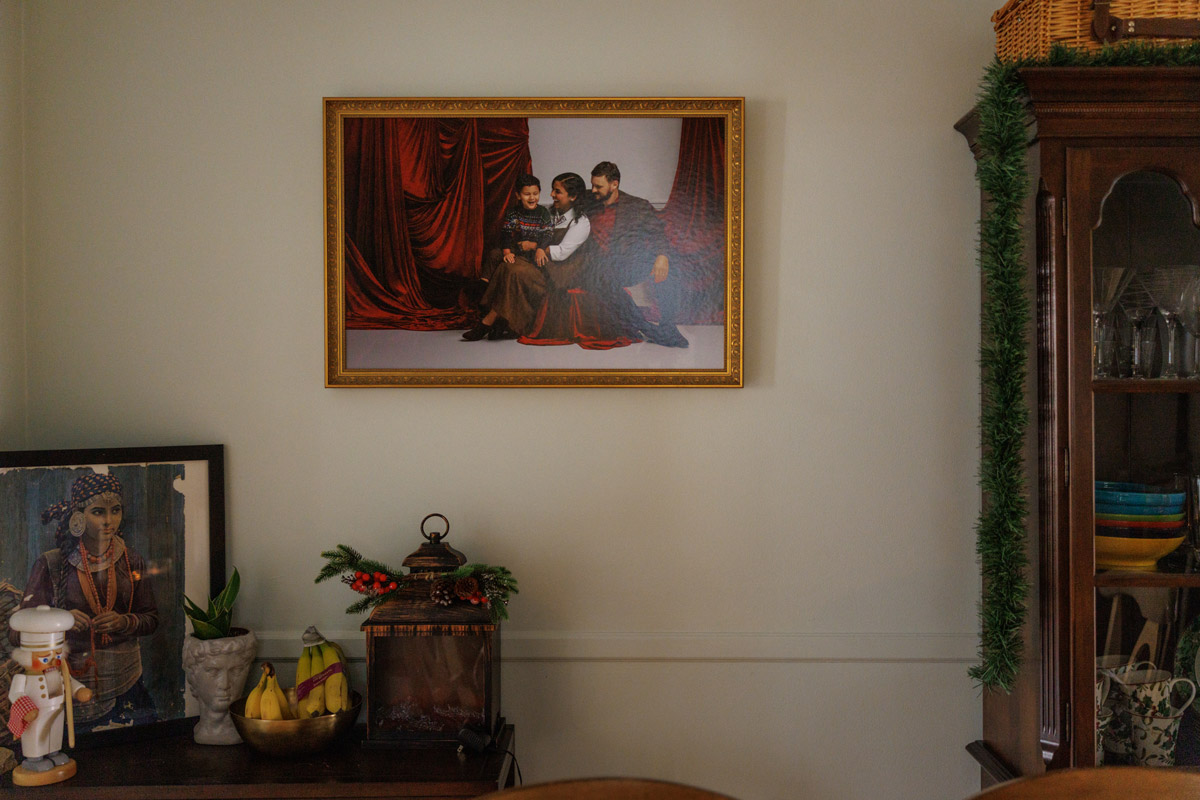
Framed family portrait with gold frame displayed above a sideboard vignette – photographed by Anj Portrait Studio.
11×14 / 12×16 | mantels, small walls, hallways
16×20 / 18×24 | medium focal pieces, within a gallery/grouping
24×36 / 30×40 | statement pieces, living room focal
Custom large (40″+) | entryways, stair landings, open-plan rooms
Let’s define those portrait sizes a bit!
Choose small sizes (5×7–8×10) for desks, shelves, and intimate nooks where the portrait acts as a personal accent; they work best for tight compositions or single-subject headshots.
Go medium (11×14–16×20) for mantels, bedside walls, and gallery groupings – these sizes hold detail without overwhelming a room.
Pick large (18×24–24×36) for living rooms, entryways, or over sofas when you want the portrait to read as a clear focal point; they suit strong compositions with negative space or full-body subjects.
Opt extra-large (30–40″+) for open-plan spaces, tall ceilings, or dramatic editorial-style portraits that need room to breathe – use these when the image has bold presence and the composition supports scale.
| Viewing Distance Guidelines |
A portrait can feel incongruent when it is in a space that doesn’t allow for proper viewing. Here’s a brief breakdown of portrait sizes and viewing recommendations.
Small pieces (less than 16″ wide): best viewed at 3 – 5 ft. Use for desks, shelves, tight nooks.
Medium pieces (16–30″ wide): best viewed at 4 – 8 ft. Good for bedrooms, mantels, hallways.
Large pieces (30–60″ wide): best viewed at 6 -15 ft. Ideal for living rooms, above sofas, entryways.
Extra-large pieces (60″+ wide): best viewed at 10 – 25+ ft. Use in open-plan rooms, tall-ceiling spaces, or as architectural statements.
Groupings: treat a cluster as one large piece – use total group width for viewing-distance calculations.
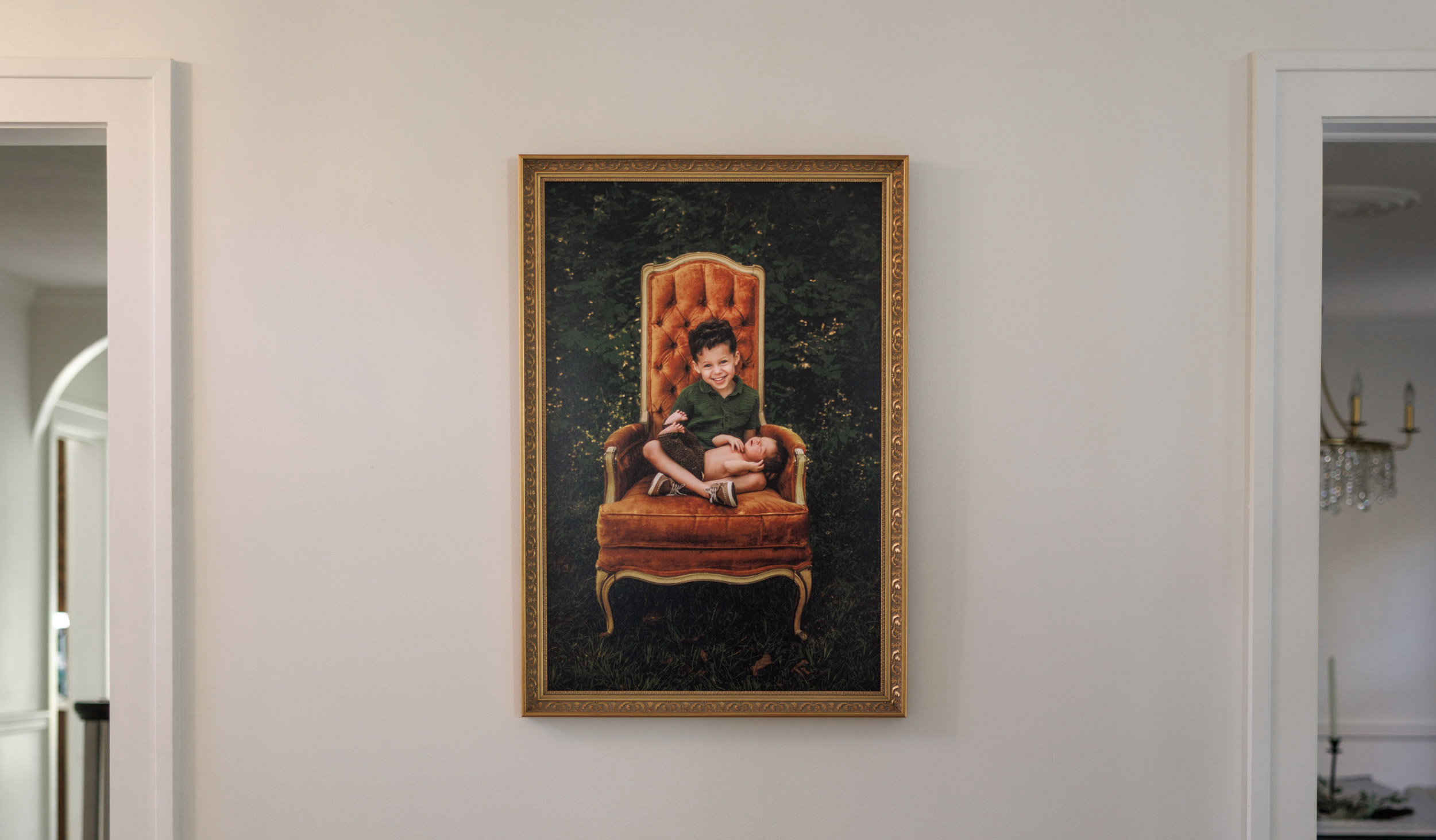
Gold-framed sibling portrait displayed above a hallway console – photographed by Anj Portrait Studio.
| Need Help? How Anj Portrait Studio Designs Art for Your Home |
Anj Portrait Studio is a full-service art studio – we handle the whole process so you don’t have to. We start with a Design Consultation to discuss your space, style, and the sizes or groupings that will work best. Sessions are planned with the final art in mind, not just a digital gallery, so your portraits are created to live on your walls.
After the session, we finish, print, frame, and install each piece for a seamless experience. Sit back and enjoy your portrait session – we’ll deliver and hang meaningful, heirloom-quality art that fits your home perfectly. Anj Portrait Studio is in the legacy game of creating meaningful art of those you love the most.